Difference between Quality Management & Quality Assurance
Quality Management

Quality Management vs. Quality Assurance – Explained Simply

/ 20.05.2026

Managing and ensuring quality—both sound important. And they are. But what exactly is the difference between these two areas of responsibility, and how do they relate to one another? The terms “quality management” and “quality assurance” are often treated as interchangeable and used synonymously. However, this is not entirely accurate.

Especially when making comparisons like “quality management vs. quality assurance,” the question often arises: Are quality assurance and quality management actually the same thing?

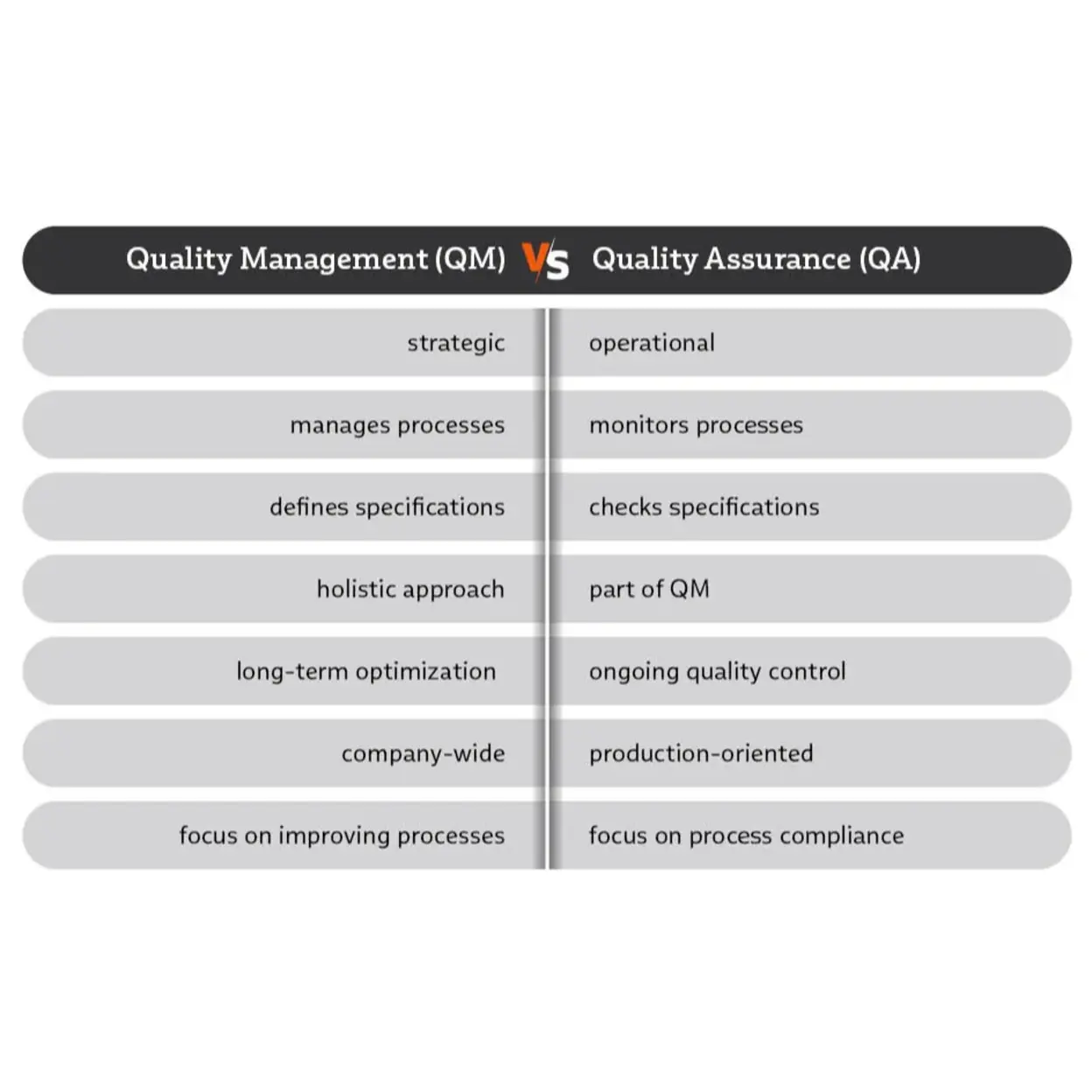
The main difference between quality management and quality assurance lies in their respective roles: Quality management encompasses all measures related to planning, controlling, and improving quality. Quality assurance is a component of this and uses methods such as audits and clear guidelines to ensure that quality standards are met and errors are prevented. In short: QM manages processes, while QA monitors and ensures compliance with them.

In day-to-day business operations, these two areas work closely together. After all, it is only by effectively managing processes and reliably monitoring them at the same time that operations can be stabilized, costs reduced, and quality ensured over the long term.

Quality Management and Quality Assurance in Practice

The difference between quality management and quality assurance is most evident in day-to-day work involving processes, standards, and controls.

What is Quality Management (QM)?

Quality management (QM) encompasses all measures related to planning, managing, and improving quality. Among other things, its objectives include:

  • designing efficient processes,
  • achieving quality goals,
  • optimizing workflows for the long term,
  • reliably meeting customer expectations.

What is quality assurance in quality management?

Quality assurance (QA) is a component of quality management and focuses on verifying and ensuring compliance with the quality requirements defined by quality management. Typical quality assurance methods include:

Why Quality Management and Quality Assurance Go Hand in Hand in Everyday Work

In day-to-day business operations, it quickly becomes clear just how closely quality management and quality assurance work together. The interplay between QM and QA plays a central role, particularly in industry and manufacturing. Even minor deviations from specifications can lead to rework, delivery problems, or customer complaints. Companies therefore need transparent processes and clearly defined standards as part of effective quality management. They also need regular inspections as part of quality assurance to enable them to respond early and minimize risks.

Real-world example: Quality Management and Quality Assurance in Production

As part of quality management (QM), a mechanical engineering company defines fixed processes, inspection plans, and quality objectives for the manufacture of a component. This includes clear specifications regarding material properties, tolerances, and inspection steps throughout the production process. Today, many companies manage these processes digitally to make information centrally available, implement inspection plans efficiently, and document actions in a traceable manner.

Quality Assurance (QA) then monitors compliance with these specifications during ongoing operations. Employees perform spot checks, verify dimensions, and document any deviations directly in the system. If a component is found to be outside the defined tolerance range, QA reports the deviation to Quality Management. QM analyzes the cause, adjusts processes as needed, and optimizes workflows for the long term.

This creates a continuous improvement process that identifies errors early on and ensures quality in the long term.


Quality Management System (QMS): The Foundation of Quality Management and Quality Assurance

For quality management and quality assurance to work together effectively in day-to-day operations, a structured quality management system (QMS) is required. A QMS helps to:

  • document processes transparently,
  • clearly define responsibilities,
  • consistently implement quality standards,
  • and identify deviations at an early stage.

Conclusion: The Difference Between Quality Assurance and Quality Management

In summary, it can be said that quality management and quality assurance share the same goal: consistently high quality and stable processes. Nevertheless, QM and QA perform different functions within the company.

While quality management establishes the organizational framework and continuously refines processes, quality assurance ensures that defined standards are consistently met in day-to-day operations.

The importance of the interaction between these two areas is particularly evident in industry and manufacturing. Clear procedures, regular checks, and transparent processes help companies identify risks early on, operate more efficiently, and ensure quality over the long term.

Would you like to manage your QM and QA processes digitally and improve them for the long term? Discover how our software can help you ensure quality efficiently and optimize your processes.

Excellent Quality with Babtec

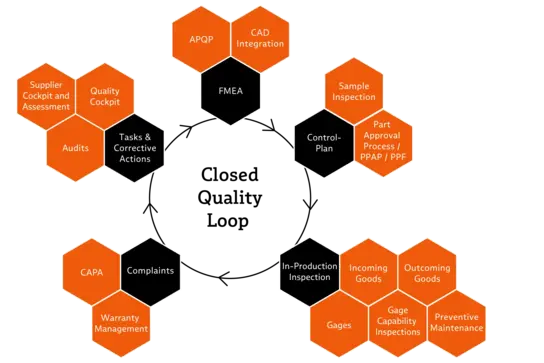
Interaction of the modules for support with operational tasks in QA and QM

a single software solution provides you with a large number of proven modules for comprehensive operational support in quality assurance and quality management. Whether FMEA, initial sampling or in-production inspection – our portfolio is structured in the sense of the Closed Quality Loop and supports you in ensuring the quality of your products and processes and inspring your customers.

Comments

No comments

Write Comment

* These fields are required