When QM Software Changes Quality Thinking
From data silos and high manual effort to integrated quality management: At the plastics manufacturer KRAIBURG PuraSys, the introduction of Babtec has not only made processes more efficient but has also positively changed employees’ quality awareness. This enables clear competitive advantages in a demanding market environment. At the same time, experience from the project shows what matters when introducing QM software and which approaches have proven effective in practice.
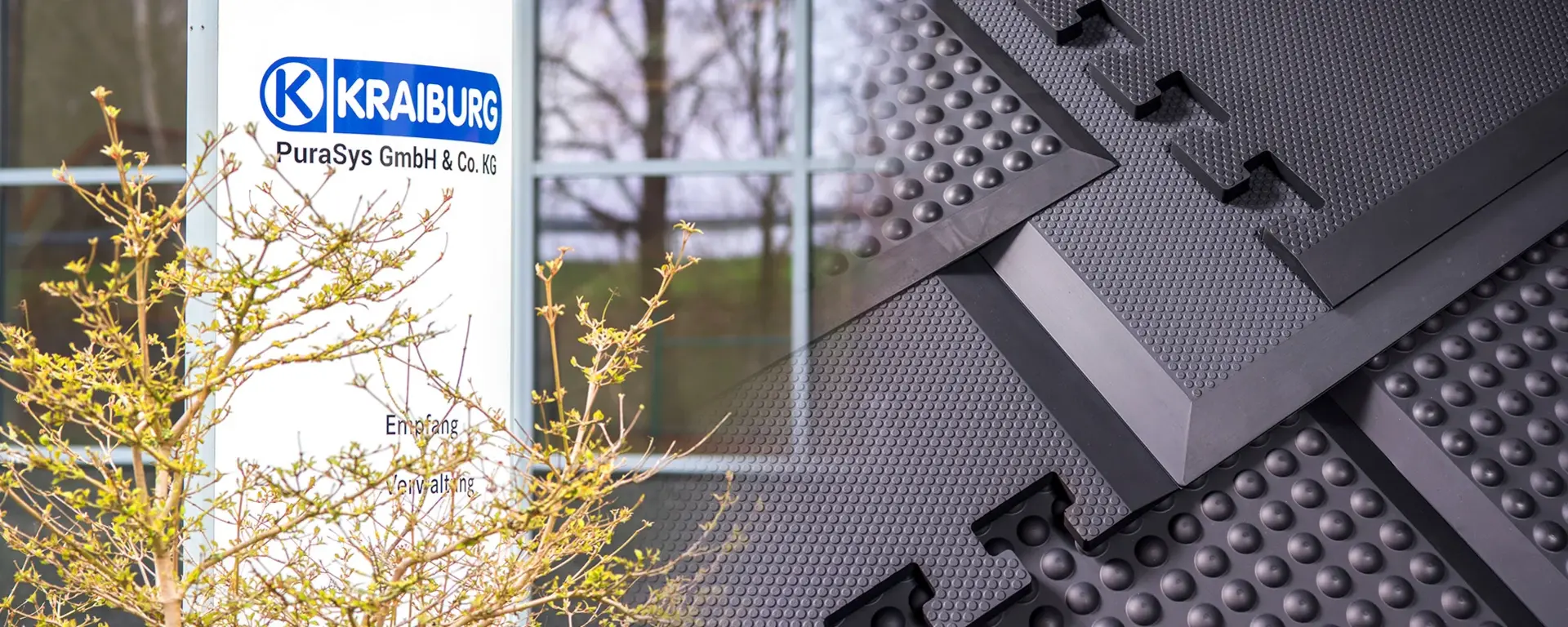
With around 130 employees, KRAIBURG PuraSys GmbH & Co. KG produces a broad range of products made from polyurethane. These include in particular solutions for vibration isolation for buildings or railway lines. In addition, the company manufactures molded parts that are used, for example, in the rehabilitation industry or in mechanical engineering. In the automotive sector, products from the Diepholz-based company can be found, for example, in grab handles or headrests.
Established Structures as a Challenge
The variety of industries served presents KRAIBURG PuraSys with complex requirements in quality management: As an automotive supplier, certifications according to ISO 9001 and IATF 16949 are mandatory, while additional requirements apply in the railway sector – such as externally monitored samples. At the same time, personnel resources in quality management are limited. This makes it all the more critical that all requirements are implemented not only in an audit-proof manner but also efficiently.
Until a few years ago, however, the reality was different: Software that was no longer up to date and also functionally limited was supplemented by spreadsheets and folder structures. Maintaining information across these data silos and retrieving it later was time-consuming. A significant portion of working time was therefore spent managing data instead of performing actual quality work. Many analyses, for example of smaller complaints, were not carried out at all, resulting in an overall superficial quality management approach.
The Step Toward an Integrated Solution
Over time, it became clear that the existing way of working posed a risk to competitiveness. The decisive trigger was the harmonization of the Failure Mode and Effects Analysis (FMEA) by the automotive associations AIAG and VDA in 2019: Implementation within the company was unavoidable, but no longer possible with the existing software. With a focus on FMEA, a new solution had to be found. The goal was to enable the QA team to focus more on its actual tasks and less on data maintenance and managing the system landscape.
With its intuitive usability, BabtecQ made a positive impression from the very beginning. One example is the clearly structured dashboards that make all relevant quality metrics visible at a glance. For a company where distributed spreadsheets and corresponding data silos had previously been the norm, this not only creates transparency: At the same time, the clear structure facilitates onboarding to the new solution and contributes to high acceptance within the team.
Integration Creates Transparency and Accountability
The interface is only one part of the whole; what happens in the background is crucial: the integration of individual modules that automatically exchange data with each other. Whenever a human decision is required, a corresponding task is triggered and the responsible parties are notified. This ensures that it is always clear who is responsible for which tasks. All essential data is consolidated in one place – without the previous media disruptions and cross-references.
In practical terms, this means, for example: Insights from complaints flow directly into the FMEA. From this, actions can be derived that can later be incorporated into the control plan. Such structures can also be reused within the FMEA itself: New analyses can be derived from existing base FMEAs without having to maintain content multiple times. This reduces effort while increasing data consistency.
More Than Efficiency Gains
With the new system foundation, not only workflows but also the way employees think has changed. The complaints management module, for example, ensures that the team consistently works and thinks in terms of the 8D methodology – even for smaller complaints or indications. As a result, even issues that previously went unaddressed are now systematically recorded and analyzed with minimal additional effort.
The benefits of the integrated data foundation are also evident in analyses and reports: Since all information is available in one place, reports can be created with just a few clicks. What used to take days is now completed in a very short time. For example, if a statistic of the most frequent complaint causes is needed at the end of the year, it is readily available without having to search through the entire folder structure for the respective period.
In this way, KRAIBURG PuraSys has been able to significantly increase the level of detail and thus the effectiveness of its quality management, which is also recognized accordingly by auditors. This is particularly evident when looking at the analyses: From the data collected over a period of two years, more insights can now be gained than from the ten years before, when work was still carried out with distributed data in spreadsheets and outdated QM software.
Structuring the Implementation
However, these improvements did not come without effort: Before the Babtec software could be used productively, existing data – such as data on products, test equipment or inspection plans – had to be structured and transferred into the system. Most of this information was already available, but not in the required format. More than 500 inspection plans alone were initially transferred into the software.
This effort is manageable – provided that the implementation is structured. It is crucial to deliberately control how many modules are introduced at the same time and to plan the implementation accordingly. Only once the prerequisites have been established, employees have been trained and the data has been transferred into the software should productive use begin. This ensures that no one is confronted with incomplete solutions and too many changes at once, which also has a positive impact on acceptance within the team. The modular approach of the Babtec software supports this procedure.
In addition, during the implementation phase it is important to engage intensively with the software – not only through training but also through practical use and regular internal exchange. This makes it possible to develop and coordinate the most suitable approach in each case. [Provider] has also been and continues to be available at all times as a reliable partner – on equal footing and without downplaying the initial efforts.
Software Delivers Value in Daily Operations
Thanks to this structured approach, the software implementation delivers clear benefits in daily operations: Instead of maintaining data across different systems and laboriously compiling it, all relevant information is now centrally available. This reduces manual effort, creates clarity and enables a significantly higher level of detail – and thus more effective quality management that clearly differentiates the company from its competitors.