Quality Management

Quality Assurance Actions: How Companies Ensure Long-Term Product Quality

Marc Osenberg / 17.06.2026

Quality assurance actions help companies identify defects at an early stage, reduce scrap, and ensure consistently high product quality. Especially in manufacturing companies, structured quality assurance actions are essential to avoid complaints, production downtime, and high quality-related costs.

Even small quality deviations can have major consequences in production — such as rework, delivery delays, or dissatisfied customers. This makes it even more important to establish suitable quality assurance actions throughout the entire production process.

In this article, you will learn which quality assurance actions are particularly relevant in manufacturing, what goals they pursue, and how companies can sustainably secure product quality.

What Are Quality Assurance Actions?

Quality assurance actions refer to all planned activities that companies use to ensure that products, processes, and materials meet defined quality requirements. Modern quality assurance is not just about detecting errors at the end of production. Instead, it starts much earlier — for example during supplier selection, production planning, or ongoing manufacturing processes.

Typical goals include:

  • Preventing defects instead of only correcting them
  • Reducing scrap and rework
  • Stabilizing processes
  • Increasing customer satisfaction
  • Ensuring compliance with standards and requirements 

Particularly in industrial manufacturing, these actions are a central component of effective quality management.

Quality Assurance Actions Throughout Production

In manufacturing companies, various quality assurance actions work together across the entire product lifecycle – from incoming goods inspection to final delivery.

Incoming Goods Inspection

Delivered materials and components are inspected for quality, dimensions, or damage. Defective raw materials can therefore be identified before entering production.

Inspection Planning

Defined inspection plans determine when, how, and according to which criteria products or components are inspected.

In-Production Inspection

During manufacturing, products are regularly inspected to detect deviations at an early stage. Examples include dimensional inspections, visual inspections, or automated sensor systems.

Final Inspection

Before delivery, the finished product is inspected to ensure that it meets all quality requirements.

Supplier Management

Suppliers also play a critical role. Regular audits and supplier evaluations are important quality assurance actions as well.

Training and Work Instructions

Well-trained employees and clear process specifications help minimize sources oferror in daily production operations.


Examples from Manufacturing

Many companies across different industries rely on various quality assurance actions to optimize their processes.

For example, a mechanical engineering company may use automated measuring systems to inspect component tolerances directly during production. In the automotive industry, camera-based inspection systems are often used to detect surface defects at an early stage. Food manufacturers, on the other hand, frequently rely on regular hygiene inspections and temperature controls.

These examples of quality assurance actions demonstrate that while the specific activities differ depending on the industry, the objective always remains the same: stable processes and defect-free products.

Reactive and Preventive QA Actions

Not all QA actions follow the same approach.

Reactive actions are applied after a defect has already occurred. These include re-inspections, blocking procedures, or complaint management.

Preventive actions, however, aim to avoid errors before they happen. Examples include:

  • FMEA
  • Inspection planning
  • Employee training
  • Process monitoring
  • Supplier audits 

Modern manufacturing companies increasingly focus on preventivequality assurance actions, as they help reduce costs and stabilize processes in the long term.

How Digital Solutions Support Quality Assurance

As product complexity increases, manual inspection processes quickly reach their limits. Excel spreadsheets, paper documentation, or isolated inspection data often reduce transparency and traceability.

Digital quality solutions help companies make inspection processes more efficient. Typical functions include:

  • Digital inspection planning
  • Centralized documentation of inspection results
  • Automated data collection
  • Transparent reporting and analysis
  • Improved traceability 

Especially in manufacturing, digital systems enable end-to-end quality assurance throughout the entire production process. Quality assurance actions are much more than isolated inspections at the end of production. They form a comprehensive system that prevents defects, stabilizes processes, and ensures long-term competitiveness. Companies that implement structured quality assurance actions at an early stage benefit from lower quality costs, more stable production processes, and higher customer satisfaction.

Learn More About Babtec Software

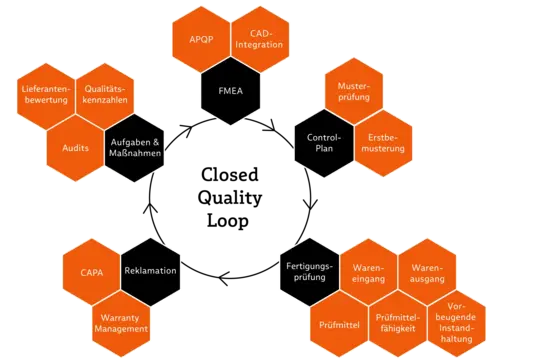
Interaction of the modules for support with operational tasks in QA and QM

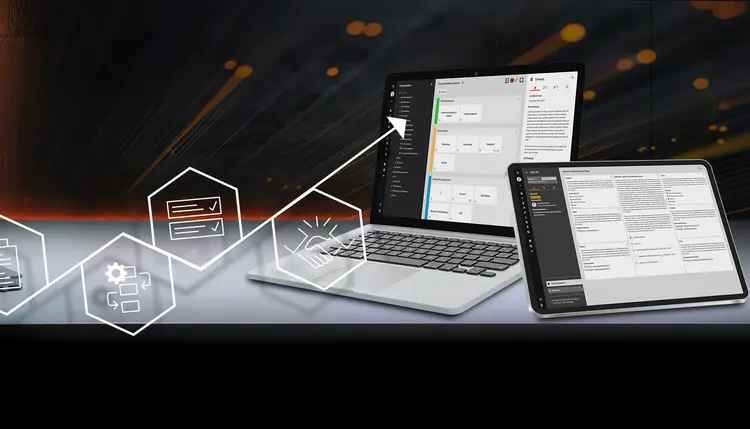
Our modular QM software supports all quality assurance actions — from control planning and in-process inspections to complaint management with guided 8D reporting. Discover your partner for excellent quality assurance.

Comments

No comments

Write Comment

* These fields are required