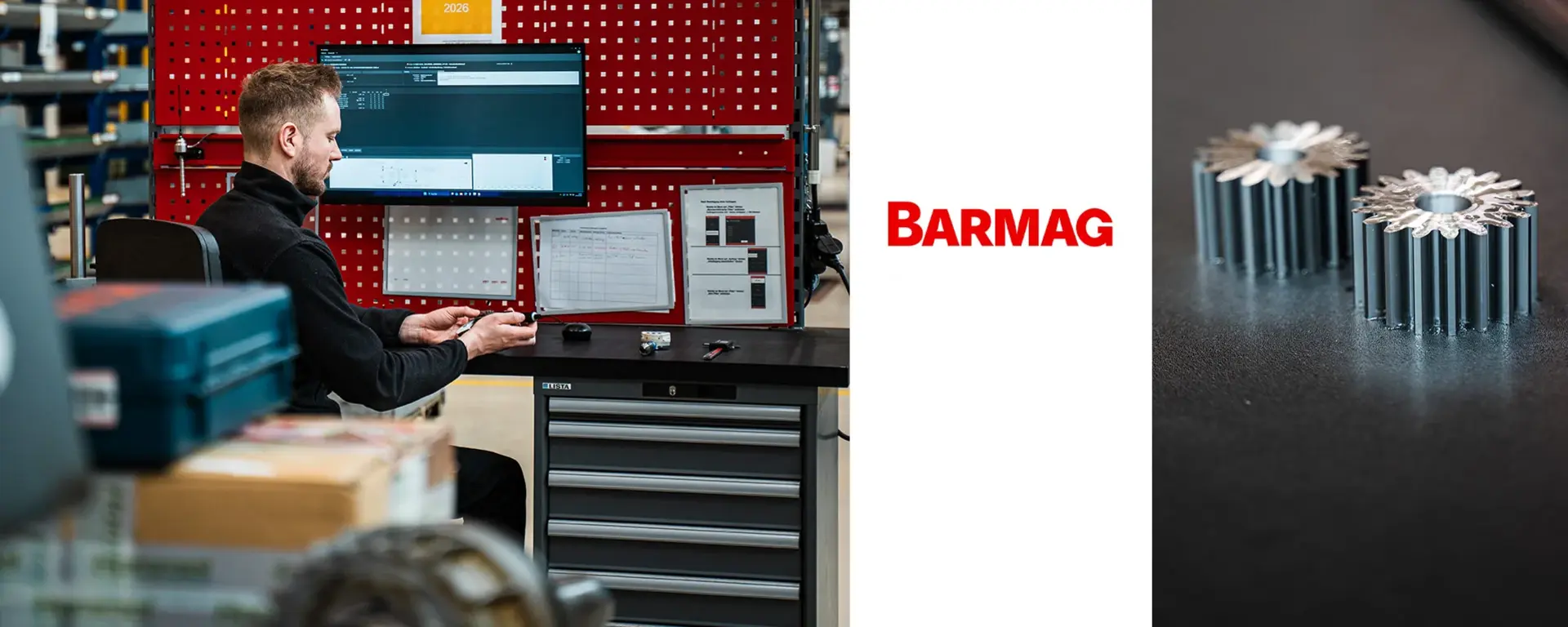
More Than a Software Project: Quality Management Is Where All the Threads Come Together
When precision down to a thousandth of a millimeter is critical, product variety is vast and lead times of several months are the norm – there is little room for error. As a traditional mechanical engineering company, Barmag is one of the leading providers of technologies for the production of man-made fibers: Made in Germany, but designed for the global market. The company based in Remscheid demonstrates how modern quality management makes products better, processes more efficient and customers more satisfied – and why the Babtec software paid for itself in no time.
Barmag machines and systems are used worldwide in the chemical fiber industry, particularly in Asia. An important and, at the same time, particularly critical component of these machines is the filament spinning pump. In the filament spinning system, it processes a molten polymer into filaments so fine that 10,000 m of filament weigh approximately one gram. Such a pump consists of several individual parts that must be precisely matched to one another. Matching the components requires manufacturing precision down to a few thousandths of a millimeter. This can only be achieved using high-precision measuring machines operated in climate-controlled measurement rooms under consistent conditions.
Another specific challenge is the enormous depth of manufacturing: The pumps undergo a rigorous manufacturing process comprising around ten different operations, ranging from pre-fabrication through external heat treatment to final finishing. In the event that a manufacturing defect were detected only shortly before the planned completion date, the entire production process would, in the worst-case scenario, have to start over from the beginning. This, in turn, would place additional strain on the already heavily utilized machinery, which could potentially lead to corresponding delivery delays. Barmag's product portfolio also differs significantly from that of many other industrial companies: Instead of large-scale series production, there is a vast variety of products with production volumes ranging from one to several thousand units per year, comprising around 25,000 different components.
Consequently, it is highly complex to account for the specific characteristics of each individual component during manufacturing, measurement and inspection. Until now, the necessary information has been provided to employees via work instructions. The associated in-process inspections were previously transferred manually – as needed – from a spreadsheet to statistical software and evaluated accordingly. This not only led to avoidable data entry errors but also failed to meet the company's own standards for standardized and transparent documentation of data throughout the production chain. The previous approach posed a certain risk in terms of error prevention, efficiency and thus also the fulfillment of quality standards, which ultimately affected customer satisfaction and competitiveness.
Modern, Comprehensive Quality Management
A modern quality management system with a generalist approach has ultimately proven to be the only sensible way to address these risks and challenges: Quality should not only be measured but holistically managed, thereby minimizing errors and continuously improving processes throughout the entire product lifecycle – with BabtecQ as the central tool. In the first step, the greatest added value was expected from the software-supported optimization of In-Production Inspection using SPC (Statistical Process Control); for all externally hardened parts processed as part of the extended workbench, Incoming Goods Inspection is generally used as well. To support this, the company utilizes the modules for CAD Integration and the Part Approval Process.
As a result, knowledge that had previously been passed on via separate work instructions or even verbally could be incorporated into standardized process chains with uniform inspection plans. Clear illustrations show, directly during measurement, which dimensions are to be determined and how, as well as which tolerance ranges apply in each case. Measurement data, which previously had to be entered manually, is fed directly into the software via specialized interfaces without the risk of reading or transcription errors. There, unambiguous traffic-light colors indicate whether measured values are within or outside the specified tolerance. Thanks to the deep integration of BabtecQ, quality-related information is available to all stakeholders in near real time and can be retrieved at any time – similar to a cockpit where all data converges.
High Acceptance and Measurable Success
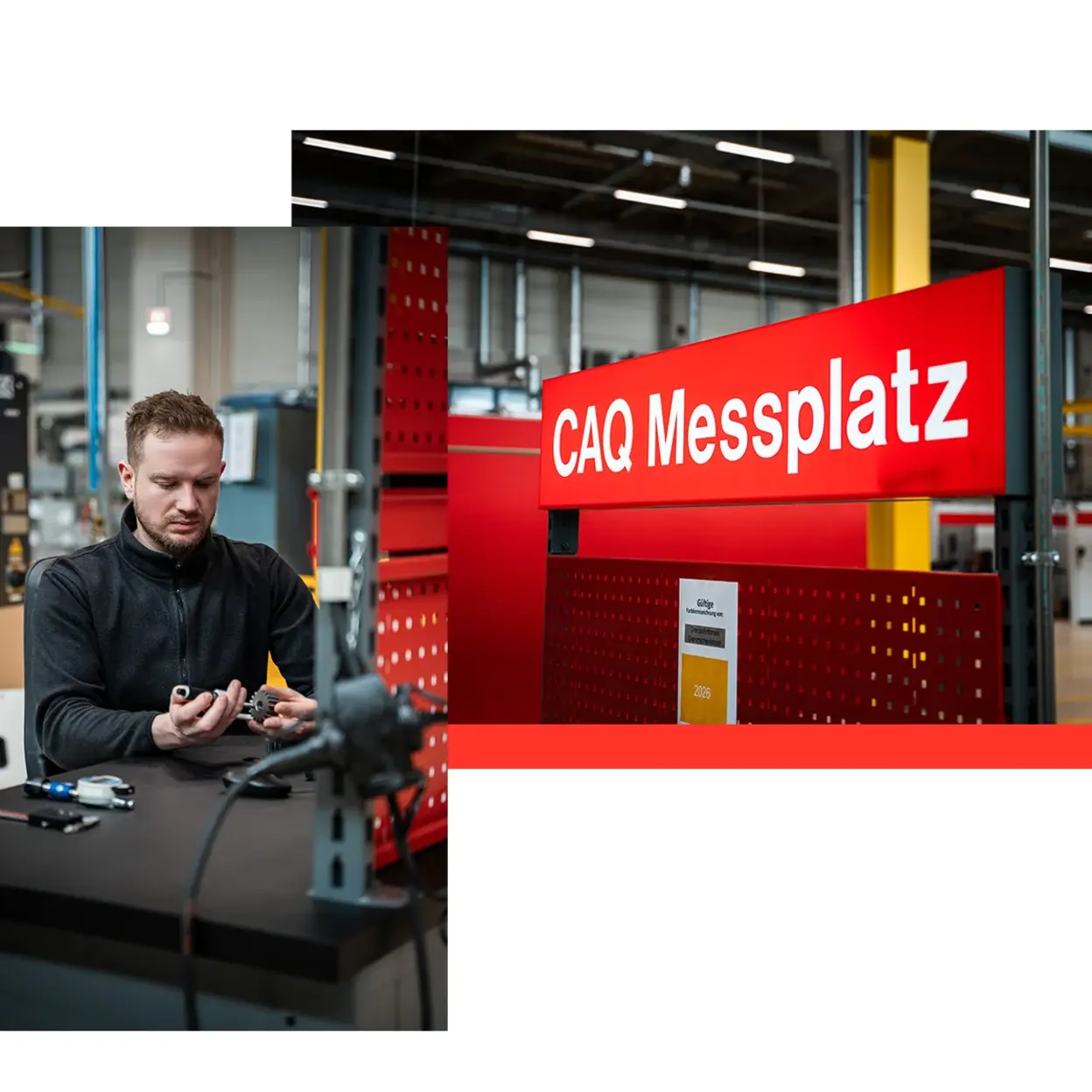
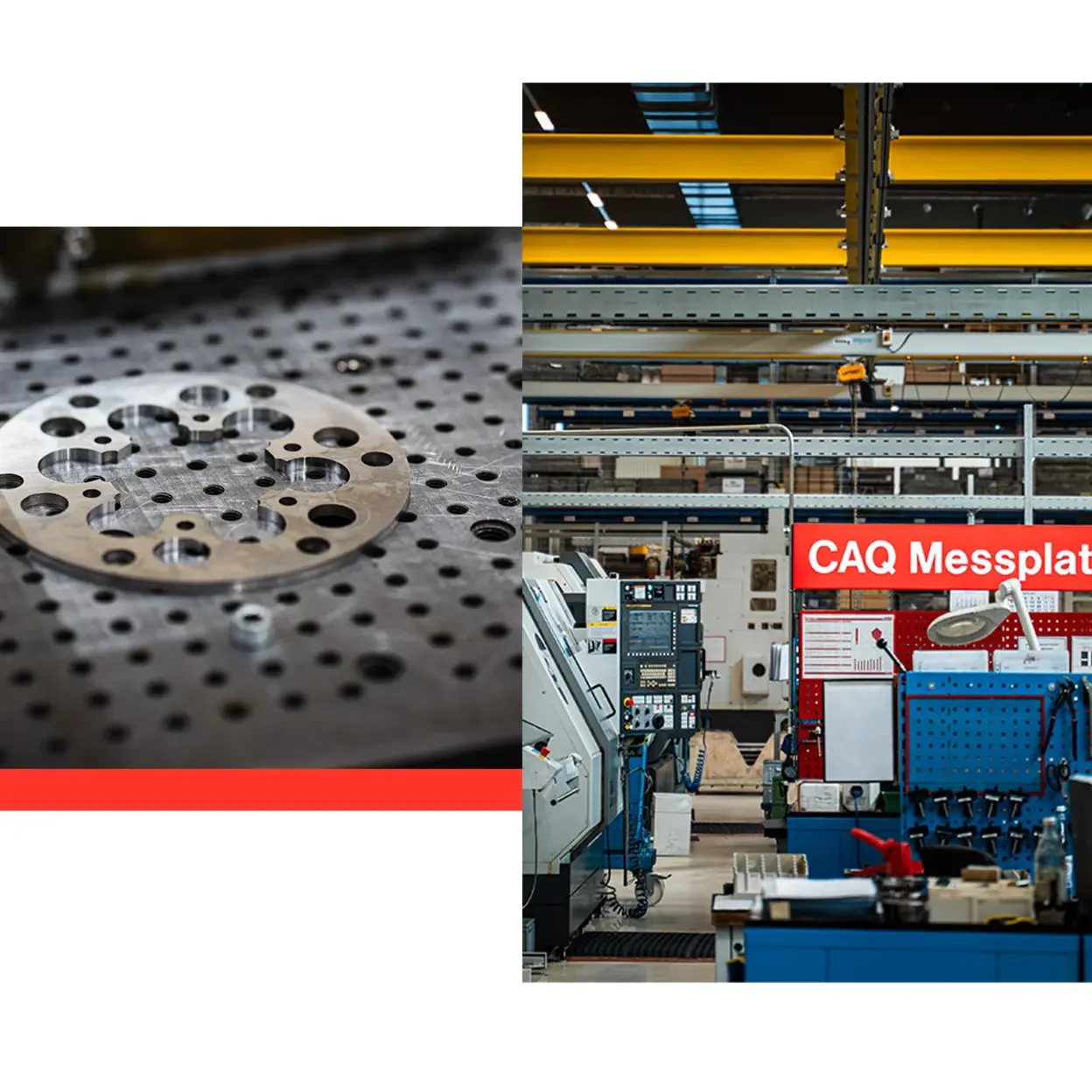
The physical counterpart to this digital cockpit are the CAQ workstations, distributed throughout the entire shop floor and equipped with Babtec software, which are integrated into a new production hall along the manufacturing line. With their illuminated displays visible from a distance, these workstations help to firmly embed regular quality checks in the team members' consciousness, while the noticeable reduction in workload simultaneously increases acceptance within the team. The trend shows that significantly more measurements are documented today than during the preliminary phase of SPC analysis on an as-needed basis, prior to the introduction of the CAQ software. Since the go-live of BabtecQ three years ago, approximately 70 % of the entire manufacturing process chain has been monitored (as of July 2026).
As a result, within the framework of quality assurance, measurement data and analyses are continuously available throughout the entire process chain. Potential component deviations are detected early, contained and appropriate corrective actions are initiated. As a result, both time- and cost-intensive corrective actions as well as delivery delays and scrap costs have been reduced. Since the introduction of BabtecQ, associated quality costs have been reduced by approximately 40 %; a significant improvement in on-time delivery is targeted for the year 2027.
Continuous Improvement with Software Support
But Barmag is achieving remarkable success with the support of Babtec software not only in daily quality assurance but also in terms of continuous improvement: With just a few mouse clicks, comprehensive statistical analyses can be generated and used to drive sustainable process improvements and efficiency gains. For example, the team can specifically identify the manufacturing steps where defects occur frequently in order to analyze and optimize the associated processes more closely. At the same time, indications of potential wear and tear on fixtures or in machine performance itself can be detected, allowing for timely maintenance or repairs to be scheduled. For individual components, the company was even able to eliminate manufacturing steps: In these cases, the comprehensive documentation had shown that the required quality level could be achieved at an earlier stage in the manufacturing process than originally intended.
A software implementation of this complexity involves not only costs but also extensive training and daily data maintenance – especially if the holistically designed CAQ project is to become a sustainable solution for quality improvement.
This is offset by the added value provided by sustainably available and transparent measurement data, which contributes to process improvements on a daily basis and ensures traceability throughout the process chain. The software has been very well received by the workforce and is now fully integrated into all quality assurance measures. Thanks to reduced quality costs, increased productivity and improved on-time delivery, the acquisition costs were fully amortized within just one and a half years.
The software and the benefits it provides have become indispensable not only from a quality assurance perspective but also across all related areas of the organization.