ISO 9001:2026 – Companies can already start preparing effectively

ISO 9001:2026 – What Companies Can Do Right Now

Manuel Klötzer / 16.07.2026

ISO 9001 is the world's most widely used standard for quality management systems and serves as the foundation for quality management in numerous companies. Interest in its revision – which is already well underway – is correspondingly high: Companies are often wondering which changes ISO 9001:2026 will bring and how they can prepare for them.

However, even aside from the specific changes, the revision offers an opportunity for companies to evaluate their own quality management and develop it in a way that is fit for the future. Companies that address this in a timely manner not only create favorable conditions for implementing the revised standard but also strengthen their processes, transparency and continuous improvement. 

Key Points on the ISO 9001 Revision

As of July 2026, the revision of ISO 9001 is in the "Final Draft International Standard" (FDIS) stage, the last draft before publication. Publication is expected in September 2026. The German and European standard DIN EN ISO 9001:2026 is expected to be published a few months later. Until then, the current version of DIN EN ISO 9001 remains authoritative. Expected changes include, for example: 

  • The topic of "climate change" will become an integral part of the standard
  • Quality culture and ethical conduct will be given greater consideration
  • Risks and opportunities will be addressed in a more nuanced manner
  • The standard is intended to become more understandable and practical by giving greater prominence to Annex A (which includes explanations, practical examples, interpretation guides, etc.) 

Experts view the new revision of ISO 9001 more as a further development than as a fundamental overhaul. However, it would be a mistake to let the time leading up to publication pass without taking action. This is because many of the measures have an impact that extends far beyond the quality management system.

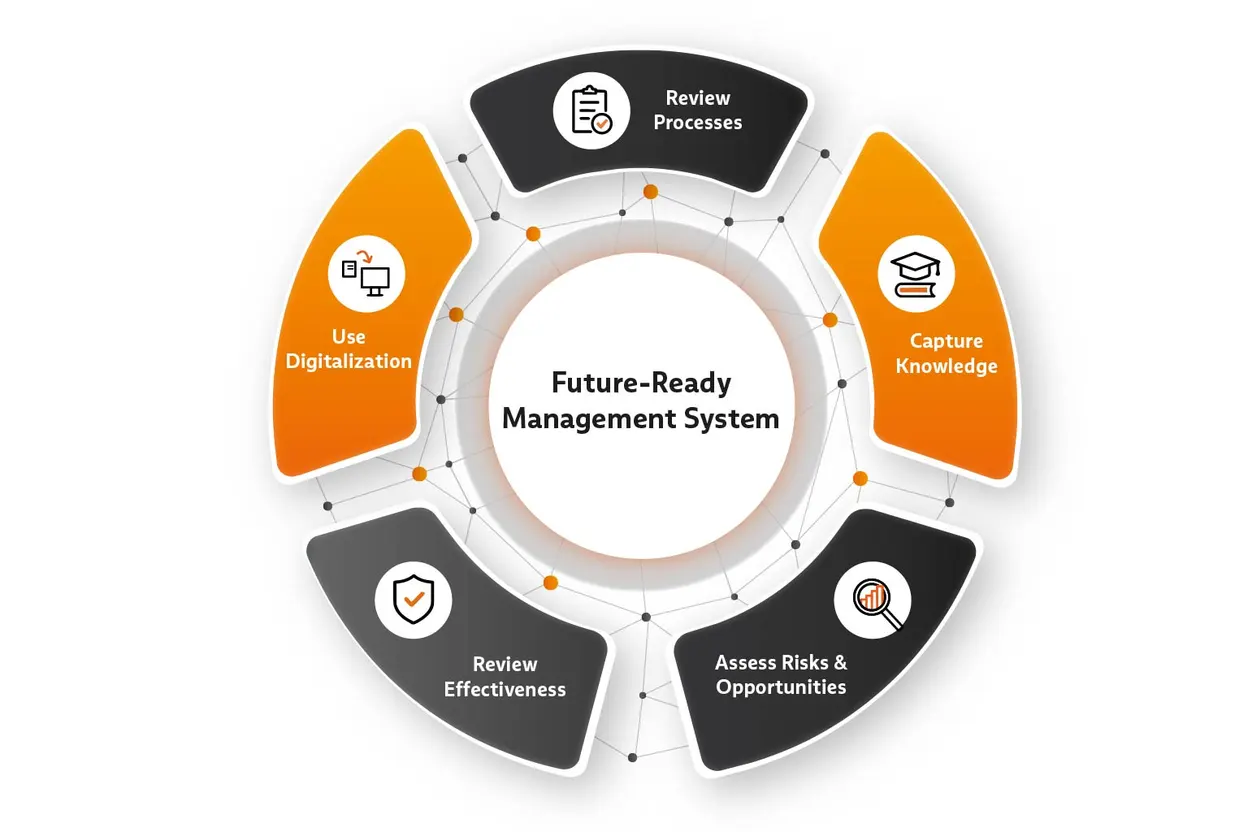
The following measures can help companies prepare their quality management systems today for the requirements of the ISO 9001 revision while also continuing to develop them independently of it.

Catarina Feld
ISO 9001:2026 is more of an evolution than a revolution. The standard is becoming more mature and refined.

Caterina Feld, Senior Expert Business Development at Babtec

1. Review Processes and Responsibilities

Revisions to standards often reveal just how resilient a management system actually is in day-to-day operations. This is because new or changed requirements can only be implemented efficiently if processes are documented up to date, responsibilities are clearly defined and interfaces are described in a transparent manner.

Companies should therefore use the ISO 9001 revision as an opportunity to review precisely these fundamentals: Does the management system still reflect the actual processes within the company? Is it clear who is responsible for which processes, documentation and changes? And can new requirements be seamlessly integrated into existing processes?

This is primarily about the ability to systematically further develop one's own management system. The more transparently processes and responsibilities are defined, the easier it will be to implement changes to ISO 9001 – as well as other standards and requirements – into practice later on.

2. Systematically Capture and Further Develop Knowledge

To meaningfully assess requirements for one's own company, access to relevant practical knowledge is necessary – such as which processes are affected and what insights from audits, complaints or corrective actions are relevant. There may also be tacit knowledge that is not clearly documented.

The revision of the standard therefore provides a good opportunity to consolidate scattered knowledge and identify gaps or inconsistencies. After all, the better relevant knowledge is documented, maintained and accessible, the easier it is to evaluate and implement changes.

3. Take a Holistic View of Risks and Opportunities

It is becoming apparent that ISO 9001:2026 will address opportunities as distinct from risks. Organizations will likely need to take a more systematic approach to opportunities and derive appropriate measures from them. This applies not only to technical risks related to product design and manufacturing but to all business risks and opportunities within the context of the management system.

With the ISO 9001 revision in mind, it therefore makes sense to review and, if necessary, expand your own risk and opportunity assessments. This not only helps meet the requirements of the revised version of ISO 9001: When applied correctly, a systematic approach to risks and opportunities generally helps companies identify hazards early on, take advantage of opportunities and strengthen their competitiveness.

4. Review the Effectiveness of the Management System

Revisions to standards such as ISO 9001 often draw attention to formal requirements: Companies then focus primarily on how to implement the standard's revised requirements and document their implementation comprehensively. However, the revision also offers an opportunity to examine not only compliance with standard requirements but also the practical effectiveness of the management system as a whole.

For example, are nonconformities, customer complaints and audit results systematically analyzed and used for continuous improvement? Are processes actually put into practice on a daily basis, or do they exist only on paper? These questions help assess the effectiveness of the management system not just formally, but in practice.

5. Use Digitalization Strategically

When requirements change, processes, documents, responsibilities, evidence and other information must be reliably updated. Digital solutions help address changes in a structured manner and track them transparently. After all, a management system can only be effective if relevant information is up-to-date and accessible to those involved.

At the same time, digital structures can help reduce media discontinuities, data silos and scattered information. This not only makes it easier to maintain the Integrated Management System but also improves collaboration across departmental boundaries.

Furthermore, connections between processes, risks, actions, audits and nonconformities can become more visible. When information is maintained in a structured manner and linked together, it supports continuous improvement while also making it easier to provide evidence for audits.


Conclusion: Early Preparation Pays Off

The ISO 9001 revision is manageable – especially for companies that take a holistic view of their management system, keep track of processes and responsibilities and proactively address risks and opportunities. The revised version of ISO 9001 will most likely not turn quality management upside down – but it offers an excellent opportunity to review and further develop one's own management system, thereby supporting the continuous improvement of the company's performance.

Digital solutions can help make relevant information available in a structured way, identify interrelationships and implement changes in a traceable manner. In this way, preparing for the revised ISO 9001 not only supports the next certification but also strengthens the management system as a whole.

Get to Know Babtec Software!

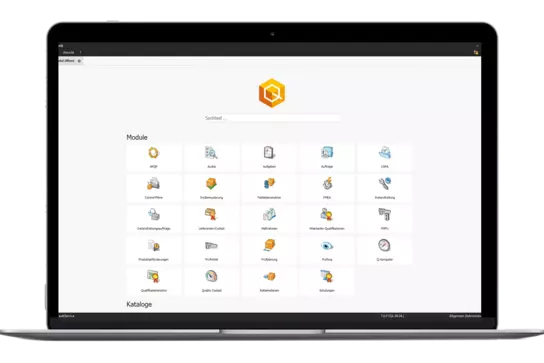
Laptop, showing the module overview of BabtecQ

The fully integrated Babtec software combines proven QM tools with modern features for the effective expansion of management systems. The software helps meet the requirements of all stakeholders and efficiently implement changes, such as those expected from the ISO 9001 revision.

Comments

No comments

Write Comment

* These fields are required